
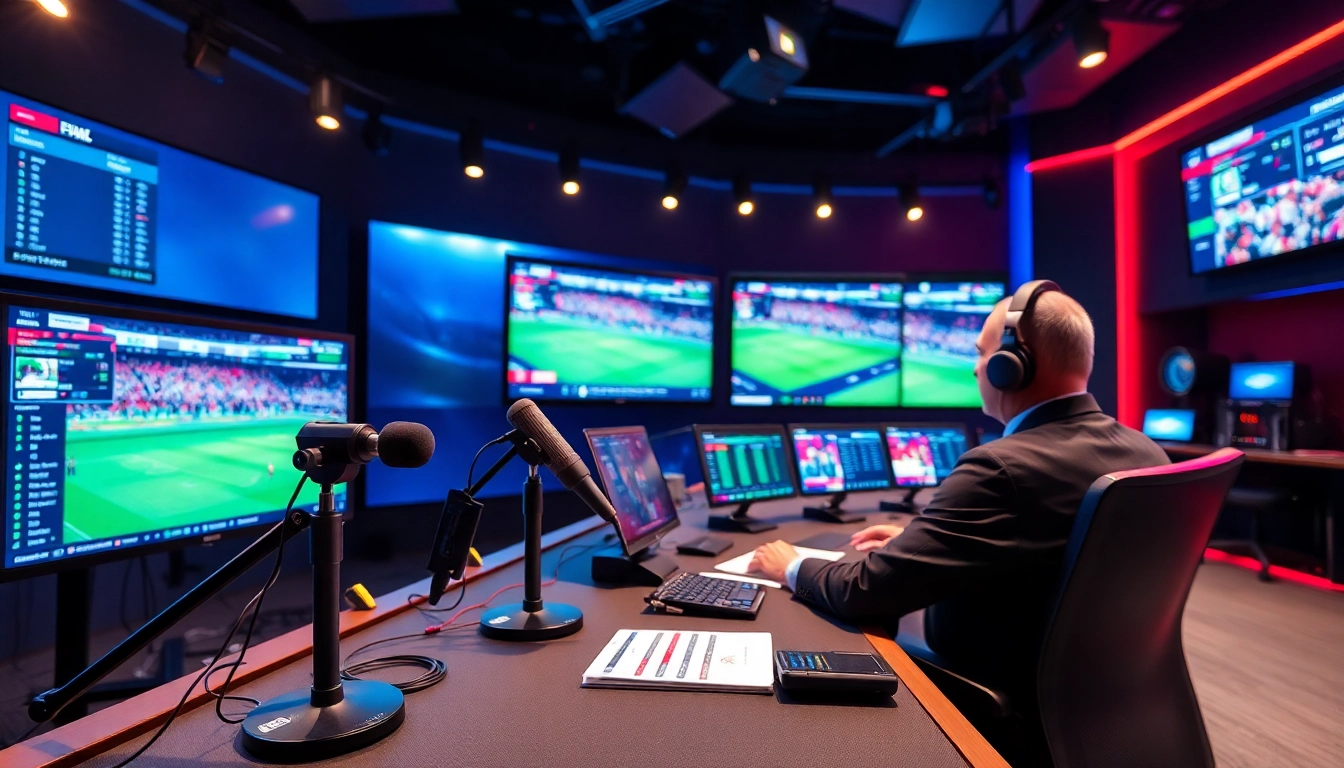
Understanding Sports Broadcasting
Definition and Importance
Sports broadcasting refers to the dissemination of sports events via television, radio, and online platforms. As a vital component of the entertainment industry, it connects audiences with live sporting events, allowing fans to enjoy their favorite games from the comfort of their homes or on the go. Sports Broadcasting plays a crucial role in promoting sports, enhancing fan engagement, and driving revenue for teams, leagues, and media companies alike.
The significance of sports broadcasting extends beyond mere entertainment; it influences sports culture, societal interactions, and even regional economies. With millions of viewers tuning in to major events, broadcasters serve as the primary conduit through which sports stories are shared and celebrated.
Types of Sports Broadcasting
There are several types of sports broadcasting, each serving different audience needs and preferences:
- Live Broadcasting: The real-time coverage of sporting events, typically via television and online streaming platforms.
- Commentary and Analysis: In-depth discussions, expert opinions, and analyses provided in various formats, such as studio shows and podcasts.
- Highlights and Replays: Compilations of key moments from games, allowing viewers to catch up on action they may have missed.
- Sports Documentaries: Educational and narrative-driven coverage aimed at providing deeper insights into specific sports, athletes, and historical events.
- Interactive Broadcasting: Viewers engage with content, offering opinions or making decisions during live broadcasts, often via social media platforms.
How Sports Broadcasting Works
The sports broadcasting process involves multiple steps and stages:
- Event Coverage: Sports networks announce upcoming events, including scheduling, commentator lineups, and promotional strategies.
- Production: This includes assembling a broadcast team of producers, camera operators, and directors who ensure high-quality coverage.
- Transmission: The broadcasting signal is transmitted through various means such as satellite, cable, or the internet.
- Engagement: Broadcasters use interactive tools to engage viewers, including real-time statistics, social media interactions, and viewer polling.
Emerging Trends in Sports Broadcasting
Impact of Streaming Services
Streaming services have dramatically transformed the landscape of sports broadcasting. Traditional cable subscriptions are declining, with many viewers opting for online platforms that provide flexibility and varied content delivery.
Services such as Hulu, YouTube TV, and ESPN+ offer live sports along with a range of viewing options, enabling fans to pick and choose their content. This shift has empowered audiences to watch their preferred sports on demand and has encouraged sports leagues to partner with tech companies to enhance accessibility and reach.
Virtual and Augmented Reality Innovations
Incorporating virtual reality (VR) and augmented reality (AR) technologies within sports broadcasting enriches viewer experience. These technologies provide immersive environments, enhancing the way fans engage with events. For example, VR can place viewers virtually in the stadium, offering a unique perspective of the action.
AR adds depth to the viewing experience by overlaying statistics, player data, and other information on-screen in real time. As these technologies advance, fans can expect even more interactive and enriched viewing experiences, further bridging the gap between reality and virtual sports worlds.
Social Media Integration
Social media platforms have become integral to sports broadcasting. Broadcasters leverage these platforms for real-time updates, highlight reels, and fan interactions during live events. This integration fosters community engagement and allows viewers to share their opinions, enhancing their participation in the sports ecosystem.
Furthermore, social media offers a space for promotional campaigns and partnerships, creating new marketing opportunities for sports entities. The ability to disseminate content rapidly through platforms like Twitter, Facebook, and Instagram has matched the fast-paced nature of sports drama, making it an essential aspect of modern broadcasting strategies.
Key Technologies in Sports Broadcasting
High-Definition and 4K Transmissions
The quality of broadcasts has seen tremendous improvements with the advent of high-definition (HD) and 4K technology. These advancements provide richer colors, sharper images, and greater detail, significantly enhancing viewer engagement. Audiences appreciate the lifelike experience which makes them feel as if they are part of the event.
4K transmissions are becoming more prevalent, particularly during major sporting events, offering incredible clarity that can elevate the experience of watching sports from home. As infrastructure improves and the cost of access decreases, more broadcasters are expected to adopt these formats, making high-quality broadcasting the new norm.
Artificial Intelligence in Broadcasting
Artificial intelligence (AI) is increasingly utilized to optimize content delivery and enhance production values. AI technologies can analyze viewer data, offering insights into audience preferences and behavior, which in turn helps broadcasters tailor their offerings.
AI can also play a role in automating aspects of broadcasting, including real-time video editing, highlight generation, and the provision of in-depth statistics and analytics during live broadcasts, enriching the viewer experience and making content production more efficient.
Remote Production Techniques
Remote production techniques gained traction, especially during challenging times when physical attendance at events was restricted. This method of broadcasting allows teams to manage productions from different locations, significantly reducing costs while maintaining broadcast quality.
This technique also offers flexibility; with a smaller crew, productions can adapt quickly to changing circumstances, resulting in uninterrupted coverage and consistent viewer experience. As remote production evolves, it is expected to become an industry standard in sports broadcasting.
Challenges Faced by Sports Broadcasters
Licensing and Broadcasting Rights
In sports broadcasting, navigating licensing agreements and broadcasting rights poses significant challenges. These rights can be complex, with different leagues and events having varying agreements regarding who can broadcast their events and in what formats.
Failure to secure the right agreements can lead to legal disputes and loss of viewership, which translates to financial repercussions. As more platforms emerge, understanding and managing these agreements becomes increasingly important for broadcasters.
Maintaining Viewership in a Competitive Market
With the rise of numerous platforms providing diverse entertainment options, maintaining viewer engagement has become a significant challenge. Sports broadcasters face competition not only from other sports networks but also from streaming services and social media.
To remain competitive, broadcasters must continually innovate their offerings, exploring new formats, interactive technologies, and engagement strategies that resonate with modern audiences.
Adapting to Changing Consumer Preferences
Consumer preferences are continuously evolving, impacting how and when sports content is consumed. Younger audiences, in particular, are shifting toward on-demand and interactive viewing experiences. Broadcasters must adapt to these preferences by offering flexible viewing options, on-demand content, and diverse engagement strategies that cater to an evolving audience.
Future Opportunities in Sports Broadcasting
Global Expansion and Reach
The future of sports broadcasting lies in global expansion. With the proper broadcasting rights and partnerships, organizations can reach wider audiences, breaking geographical barriers. This expansion provides opportunities for untapped markets where sports interest is growing rapidly.
Increased digital access worldwide further facilitates this expansion, enabling even niche sports or local games to reach international audiences and build fan bases. Broadcasters must identify and invest in emerging markets to tap into this potential.
Personalization and Viewer Engagement
As technology evolves, the demand for personalized viewer experiences will only grow. Future broadcasts may leverage viewer data to tailor content, ad placements, and interactive experiences based on individual preferences. For instance, offering alternative camera angles, tailored commentary, or interactive polls can significantly enhance viewer satisfaction.
Engaging viewers on a personal level creates a connection, helping broadcasters foster loyalty among audiences.
New Revenue Models in Broadcasting
The traditional revenue models of sports broadcasting are being challenged. New avenues, such as subscription-based models, pay-per-view options, and targeted advertising, are emerging. This shift could allow broadcasters to create diverse revenue streams while providing content that meets consumer expectations.
Exploring partnerships with technology companies can further innovate these revenue models, providing broadcasters with the tools to engage audiences effectively while maximizing monetization potential.
FAQs
What is sports broadcasting?
Sports broadcasting involves transmitting live or recorded sports events through various media channels, including television and online platforms.
How are sports broadcasts produced?
Producing sports broadcasts involves coordinating a team of professionals, including producers, directors, and camera operators, to ensure the quality and effectiveness of the coverage.
What are the challenges of sports broadcasting?
Challenges include navigating licensing rights, maintaining viewer engagement in a competitive market, and adapting to changing consumer preferences.
What technologies are impacting sports broadcasting?
Key technologies include high-definition and 4K transmissions, artificial intelligence, and remote production techniques, all of which enhance viewer experiences.
How can sports broadcasting expand globally?
Broadcasters can expand globally by forming partnerships for broadcasting rights, exploring emerging markets, and embracing digital technologies for wider reach.